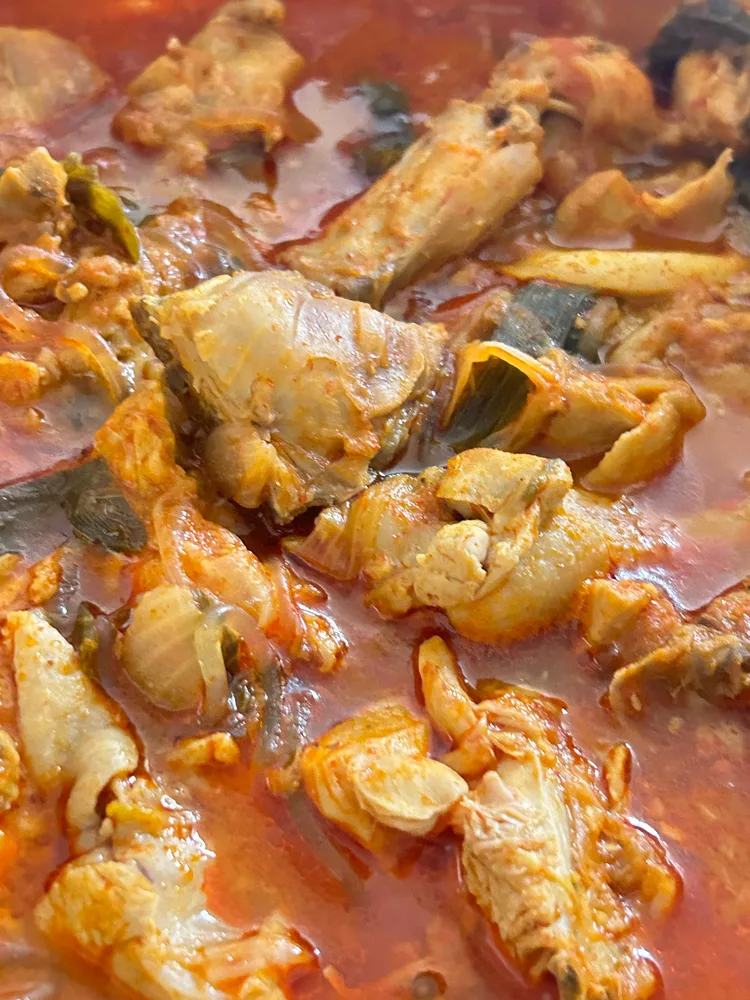
It had been a while since I last ate dakdoritang (닭도리탕, also called dakbokkeumtang), a Korean dish of chicken pieces braised in a spicy red sauce. I just used a store-bought sauce mix. And for the first time in a really long time, I had makgeolli with it. I bought it at a neighborhood supermarket. They had Walmae makgeolli (월매 막걸리), so I picked it up. I did not go looking for this brand on purpose.
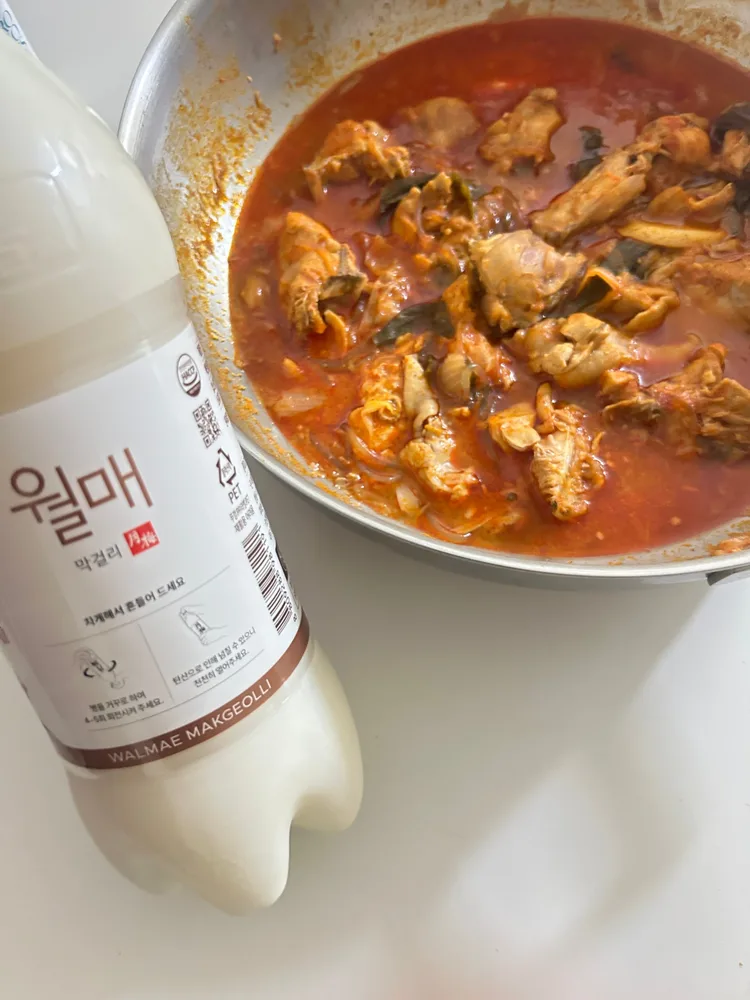
Cold makgeolli. It felt like a good match for dakdoritang. In Korea, the classic partner for makgeolli is pajeon (a savory green onion pancake). It feels like quite a long time since I last had them together.
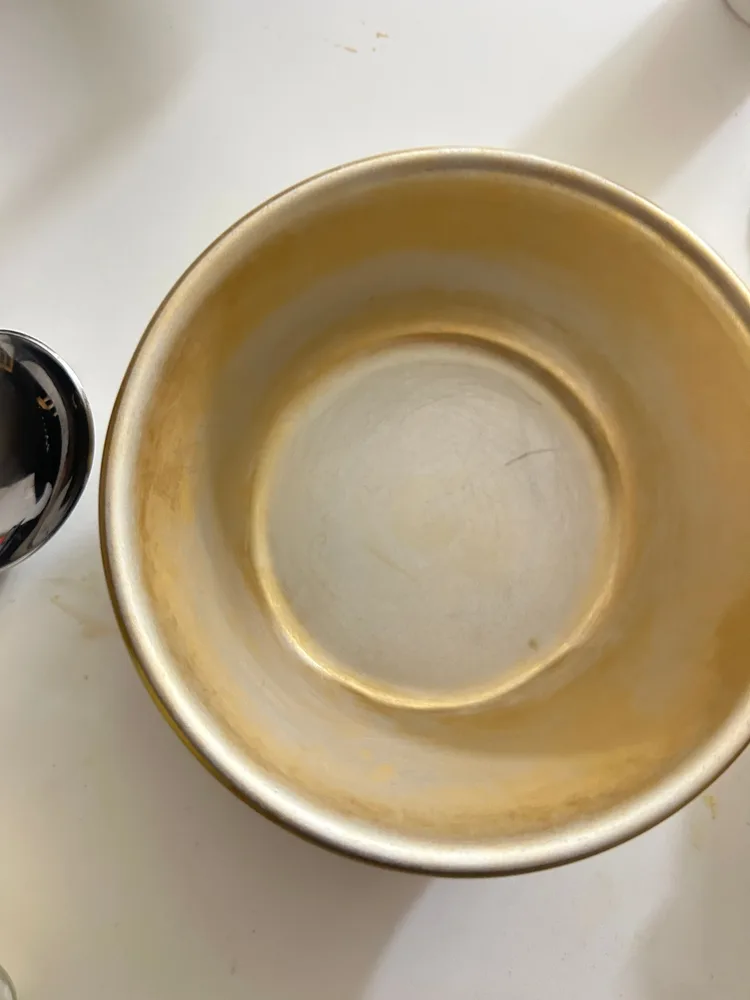
Makgeolli should be drunk from a bowl, like a brass bowl or a sabal (a wide traditional bowl). Sometimes I see canned makgeolli at convenience stores, but I have never even imagined drinking makgeolli from a can. Pour it into a brass bowl, or even just a rice bowl, and drink it from there.
What Is Makgeolli?
Makgeolli (막걸리) is a traditional Korean alcoholic drink made by fermenting rice (sometimes with wheat) with nuruk, a traditional fermentation starter. It is not filtered clear, so it looks milky white and has a little sediment at the bottom. That is why the bottle is shaken or turned over to mix it before drinking. It is usually lightly sparkling and much weaker than soju.
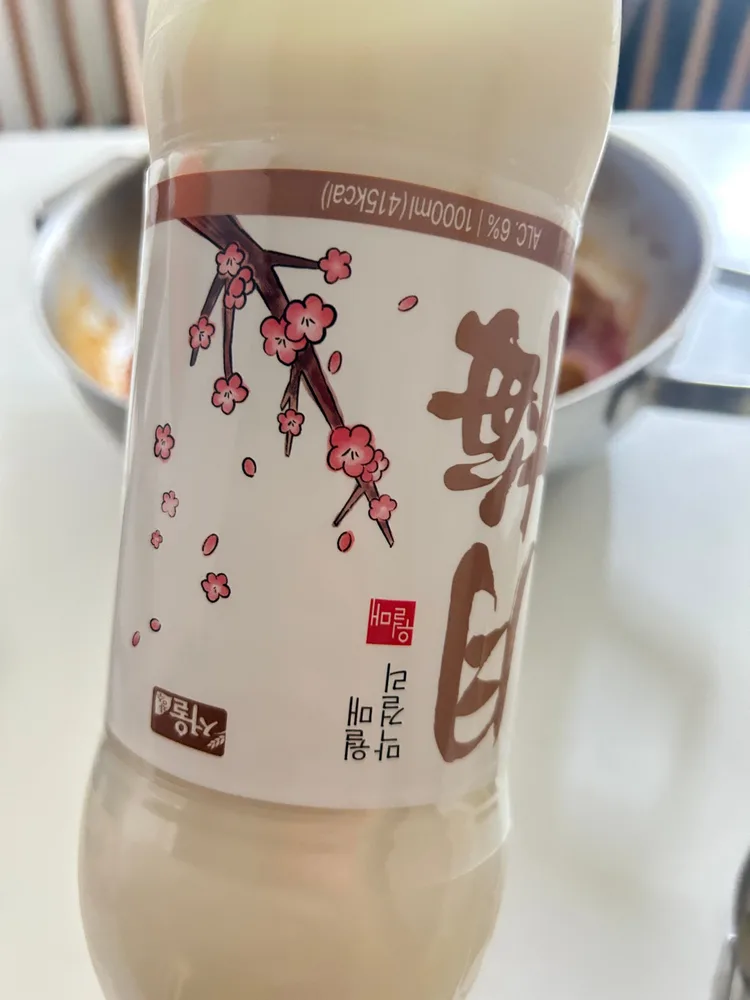
Walmae makgeolli comes in a 1000 ml bottle, and the alcohol content is 6%. That is a moderate level. According to the label, the whole bottle is 415 kcal. The label also says to turn the bottle upside down 4 to 5 times before drinking, and to open it slowly because the carbonation can make it overflow. Now that I think about it, the reason I bought Walmae makgeolli was that it had more in the bottle than the usual 750 ml ones.
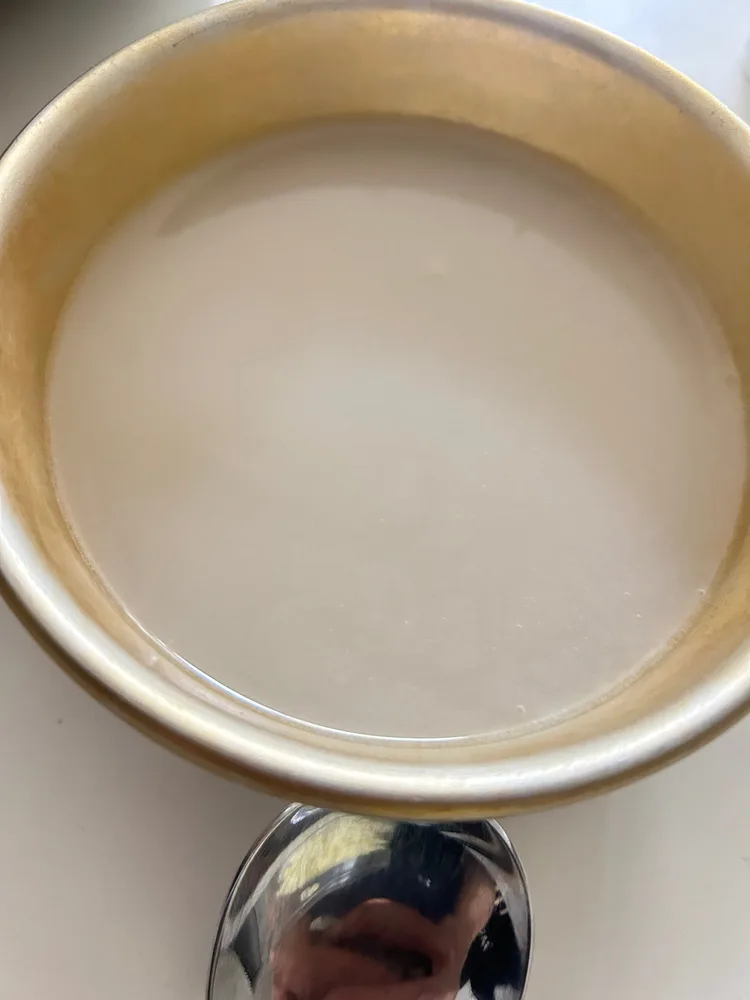
About 10 years ago, maybe? There was a makgeolli boom in Korea at one point. Then it faded fairly quickly. I think it was also promoted with names like "white sake" or "white wine." Riding that boom, restaurants specializing in many different kinds of makgeolli opened, but most of them seem to have disappeared now.
A glass of cold makgeolli with thick, saucy dakdoritang. Makgeolli has a slight rice flavor, and I think it goes better with dakdoritang than beer does. Soju is fine too, but when I want a light drink once in a while, makgeolli is just right.
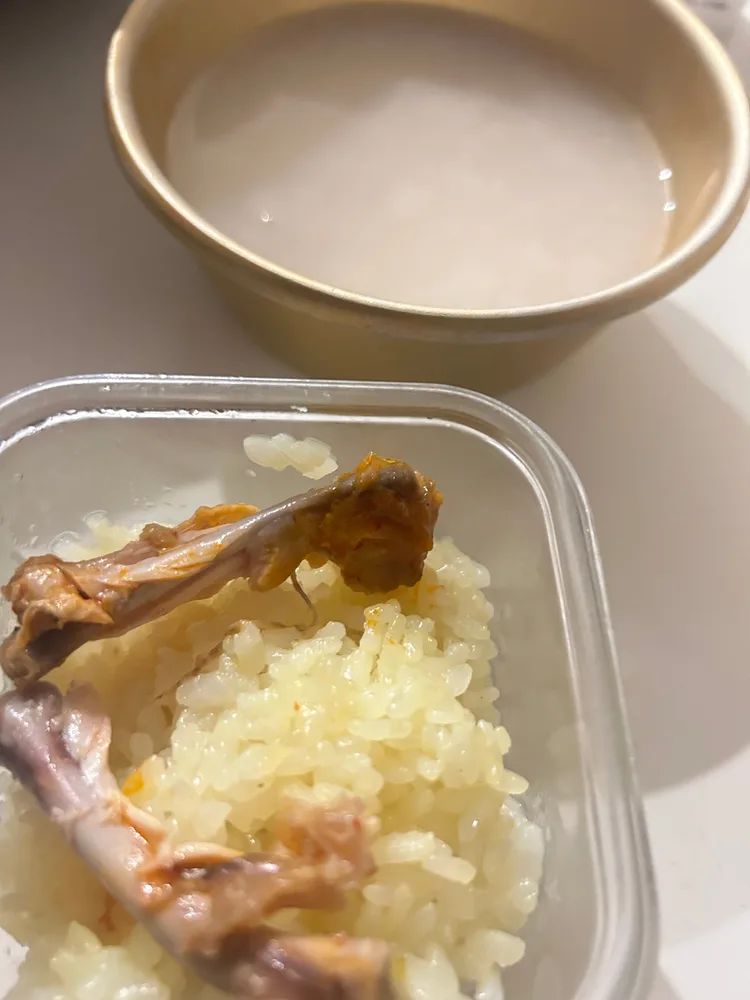
But honestly, I cannot really tell the difference between makgeolli brands. They are all just sweet. Why is there so much sweetness? As I have written in earlier posts about Korean fried chicken and a non-spicy ramyeon, a lot of Korean food these days feels too sweet overall, and makgeolli seems to be no exception. In the past, I think Kooksoondang (a Korean makgeolli and traditional liquor company) sold an "old-style" makgeolli. I do not remember the exact name, but it was very dark, rich and heavy, and now I cannot find it anywhere. As far as I remember, it was maybe 12% alcohol, which is quite high for makgeolli.
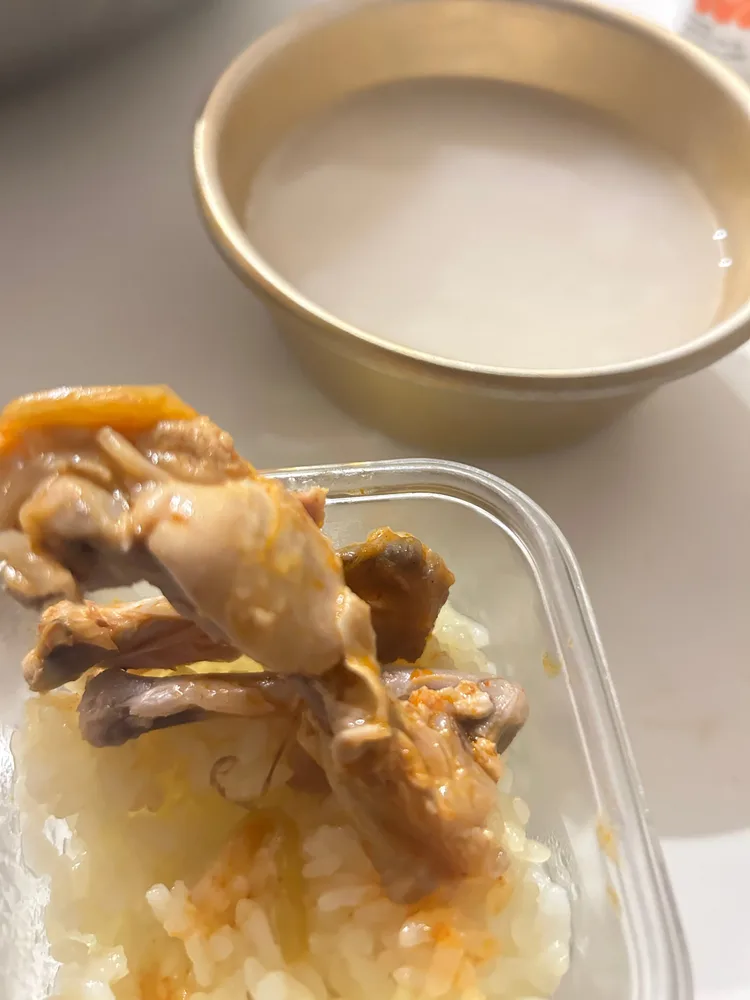
People also used to mix makgeolli with "cider" (in Korea, this means a clear lemon-lime soda like Sprite). This is called maksa (막사), short for makgeolli plus saida (사이다, the Korean word for "cider"). That tells me makgeolli itself was not that sweet back then. It also did not feel as fizzy as it does now... though maybe my memory is wrong. These days I only drink makgeolli now and then. At first it feels cool and pleasant, but after just a little, the taste starts to feel heavy.
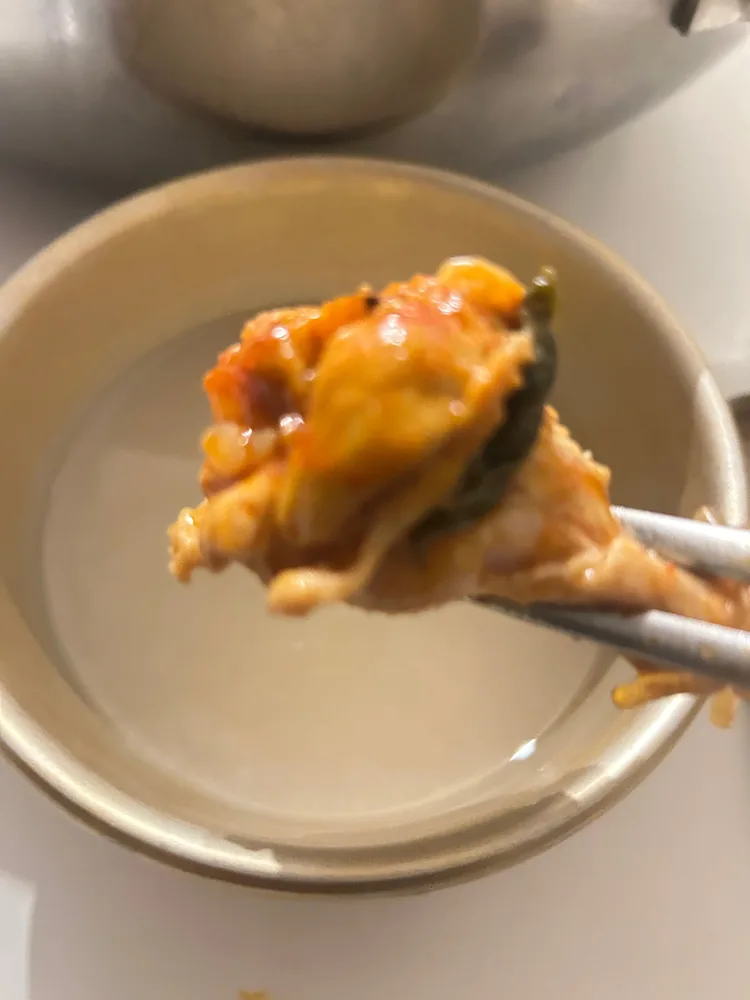
Meanwhile, the dakdoritang was delicious. :)
Makgeolli is tasty when I have it occasionally, but the flavor wears thin quickly. I wonder if it is just me.
Quick Facts
| Product | Walmae makgeolli (월매 막걸리) |
|---|---|
| Size | 1000 ml |
| Alcohol | 6% |
| Calories | 415 kcal per bottle |
| Before drinking | Turn the bottle upside down 4 to 5 times; open slowly (carbonated) |
| Paired with | Dakdoritang (spicy braised chicken), made with a store-bought sauce |
Product details are from the bottle I had and may change. Please check the label of the one you buy.