Have you ever tried Nongshim Gamjamyeon (감자면, "potato noodles," sold abroad as Nongshim Potato Noodle Soup)? It seems to have been on Korean store shelves for quite a long time, but to be honest, this was my first time eating it. Someone around me gave me a pack, so I finally cooked it. The package says "beef shabu-shabu broth flavor." What do Gamjamyeon and shabu-shabu broth have to do with each other?
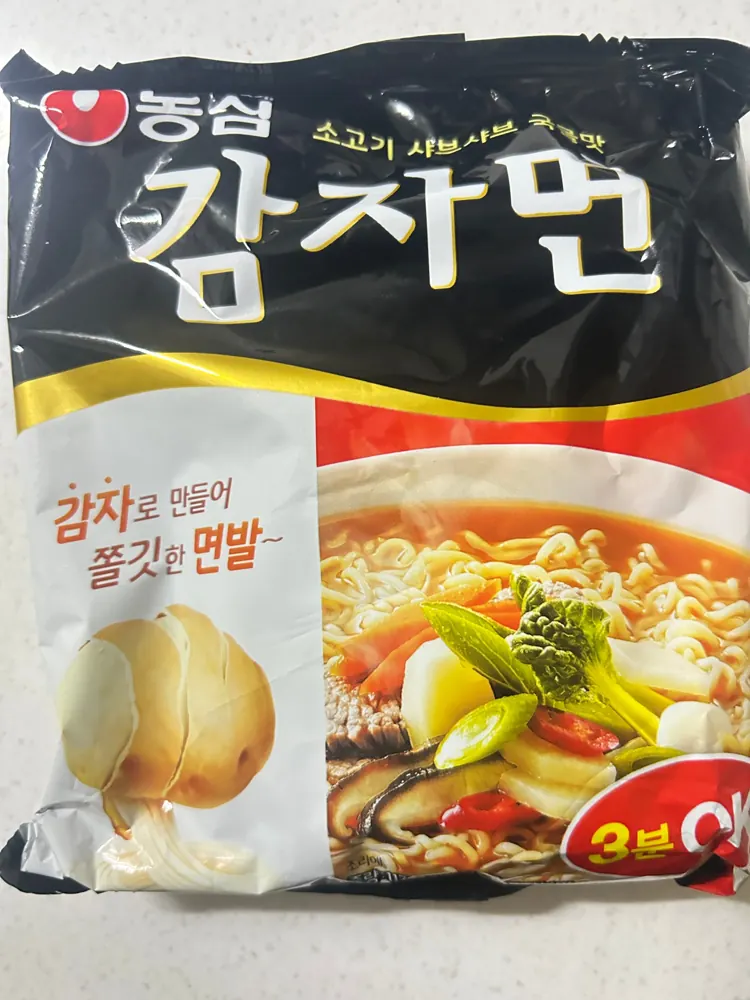
The package says the noodles are made with potato, which makes them chewy. I wondered if they would fall apart like mashed potato. Of course, there is probably only a small amount of potato in them.
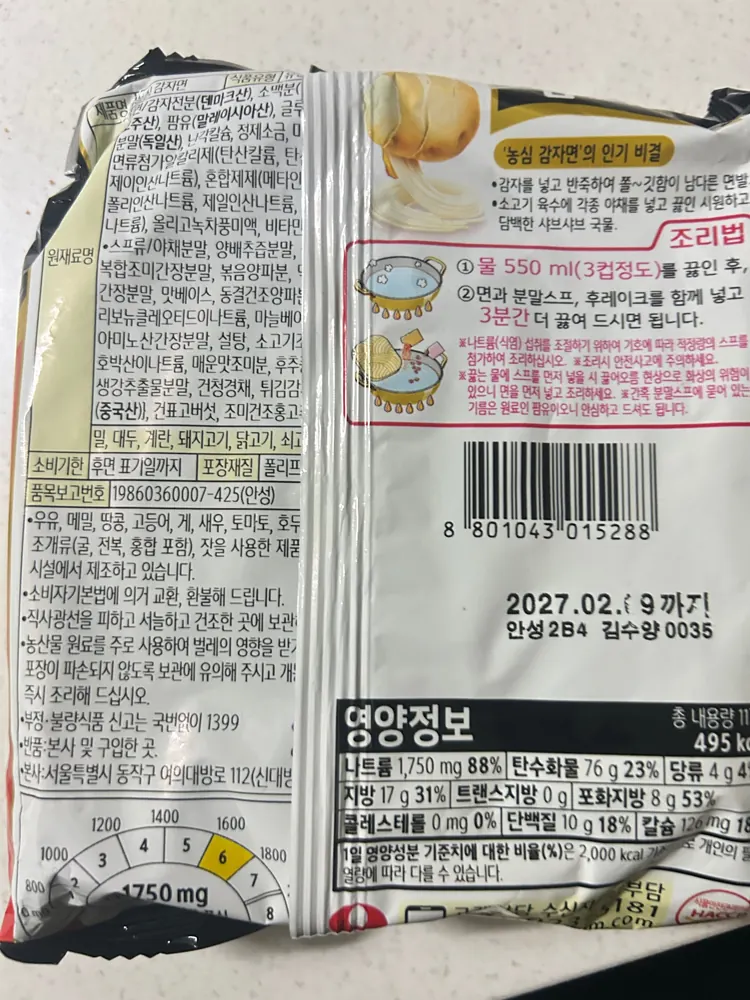
Gamjamyeon has 1,750 mg of sodium per pack (88% of the daily value on the Korean label), which does not seem very different from spicy Korean ramyeon. Keep in mind that this number assumes you drink all of the soup. The pack is 495 kcal. Gamjamyeon's main selling point is its chewy noodles.
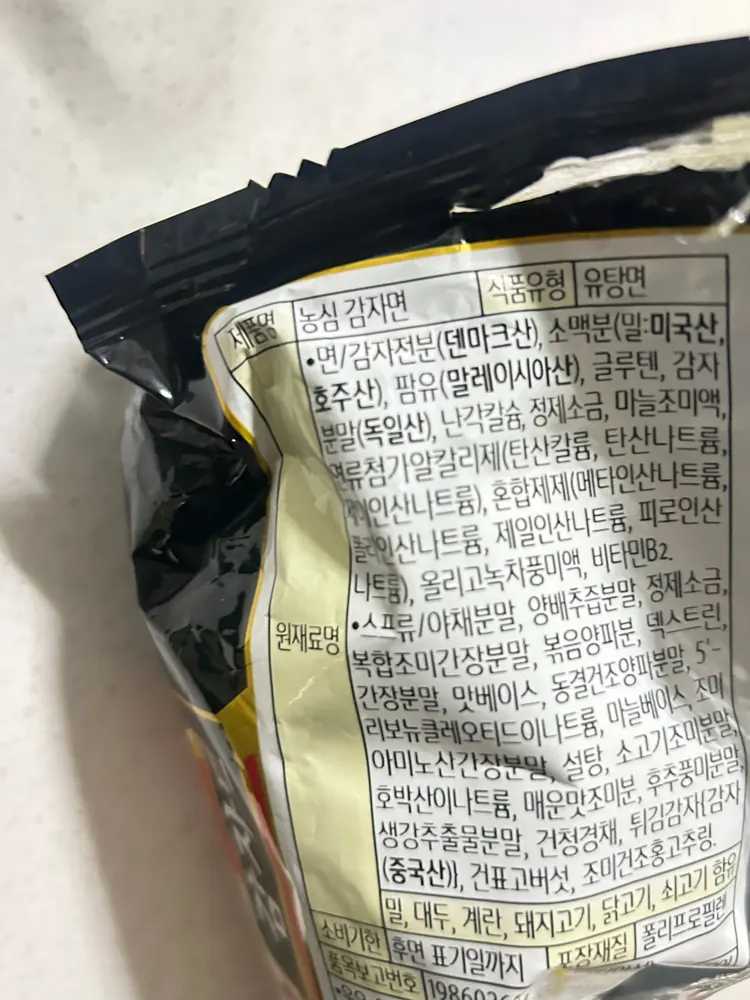
The noodles really are made with potato starch, which is listed first, followed by wheat flour. According to the package, the product contains wheat, soybeans, eggs, pork, chicken and beef, so check this if you have allergies or dietary restrictions.
The directions say to boil 550 ml of water (about 2 1/3 US cups), add the noodles, soup powder and dried vegetable flakes, and boil for 3 more minutes. Even when the type of ramyeon is different, the amount of water for Korean instant noodles seems to be almost always 500 to 550 ml. The package also warns that putting the soup powder into boiling water first can make it bubble over, so it is safer to put the noodles in first.
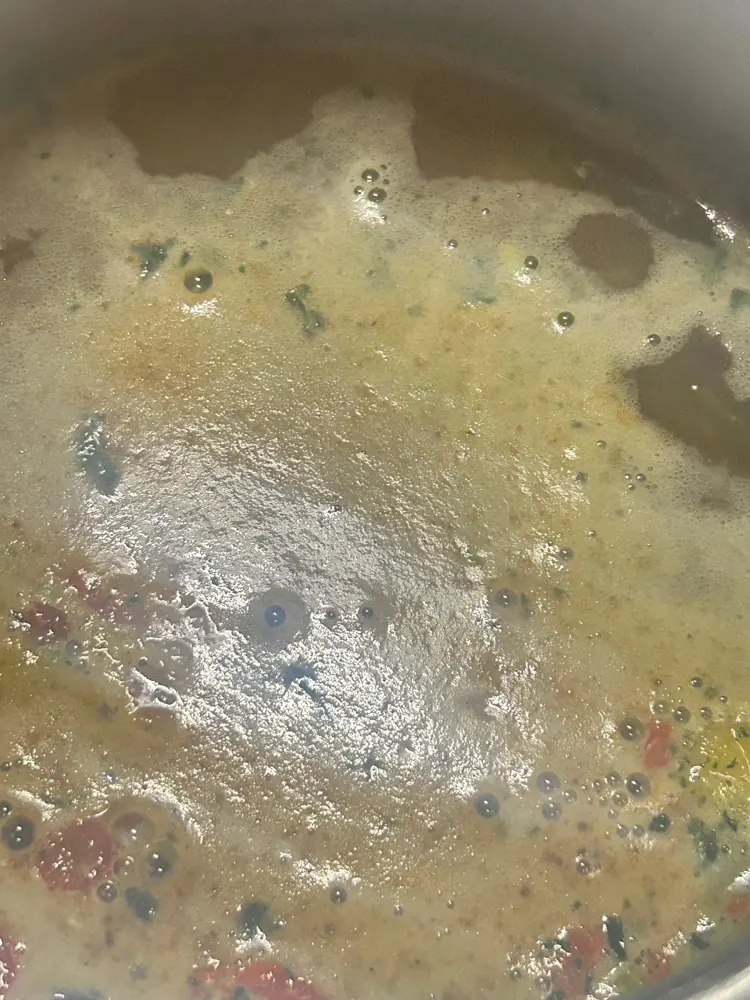
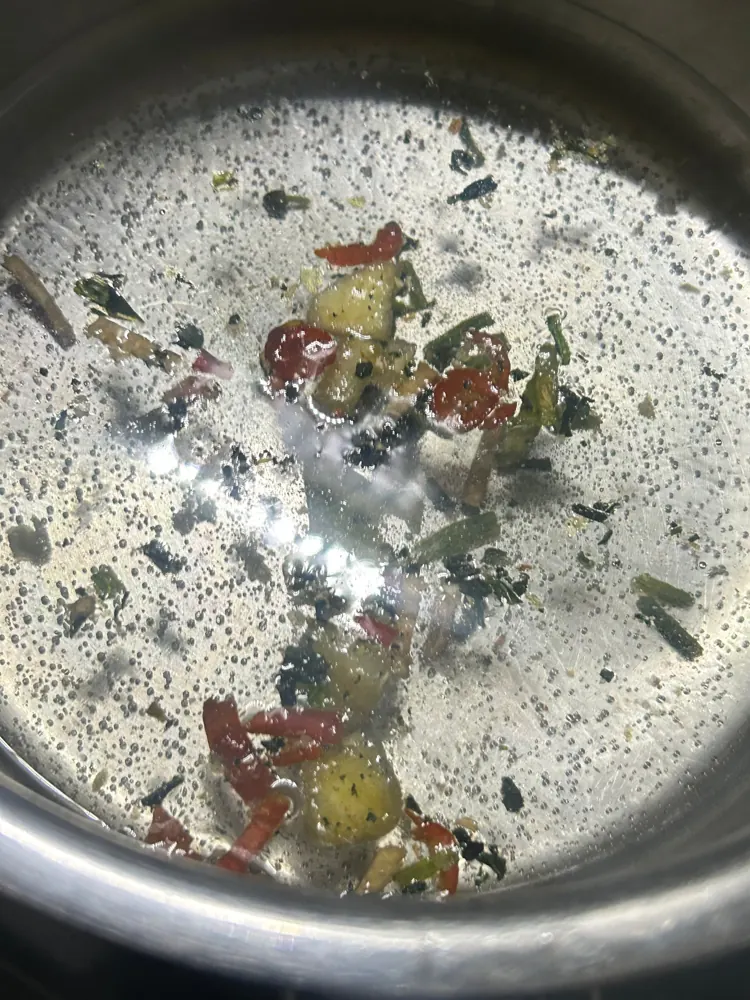
After I added the soup powder, the color looked a bit like doenjang (Korean soybean paste) soup.
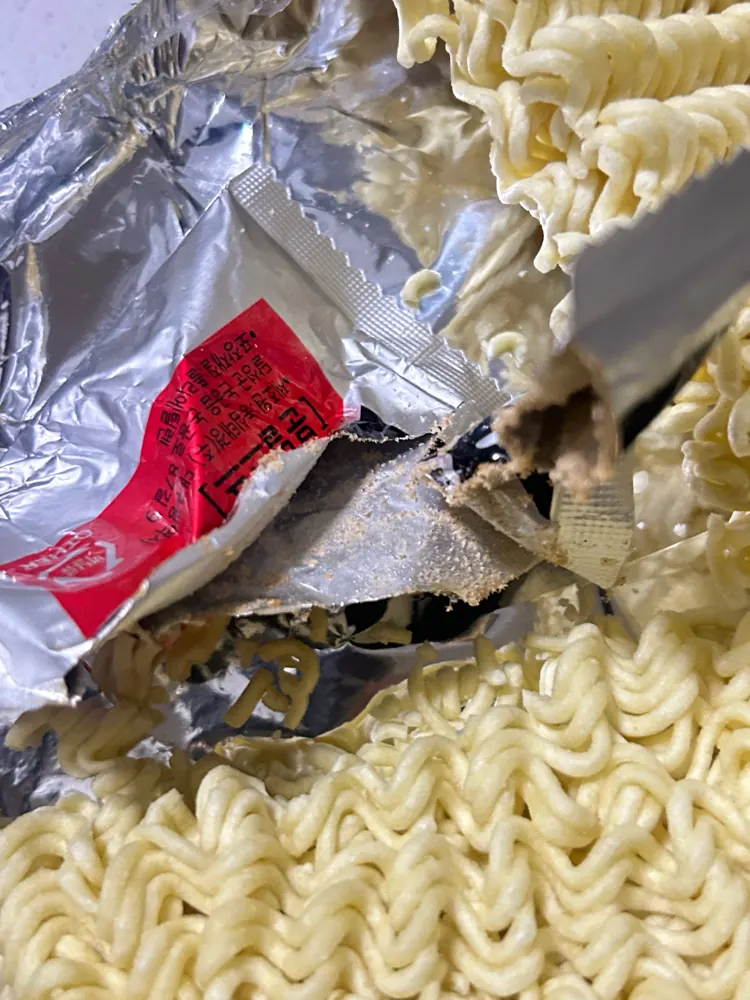
The powder itself was a mix of gray and brown.
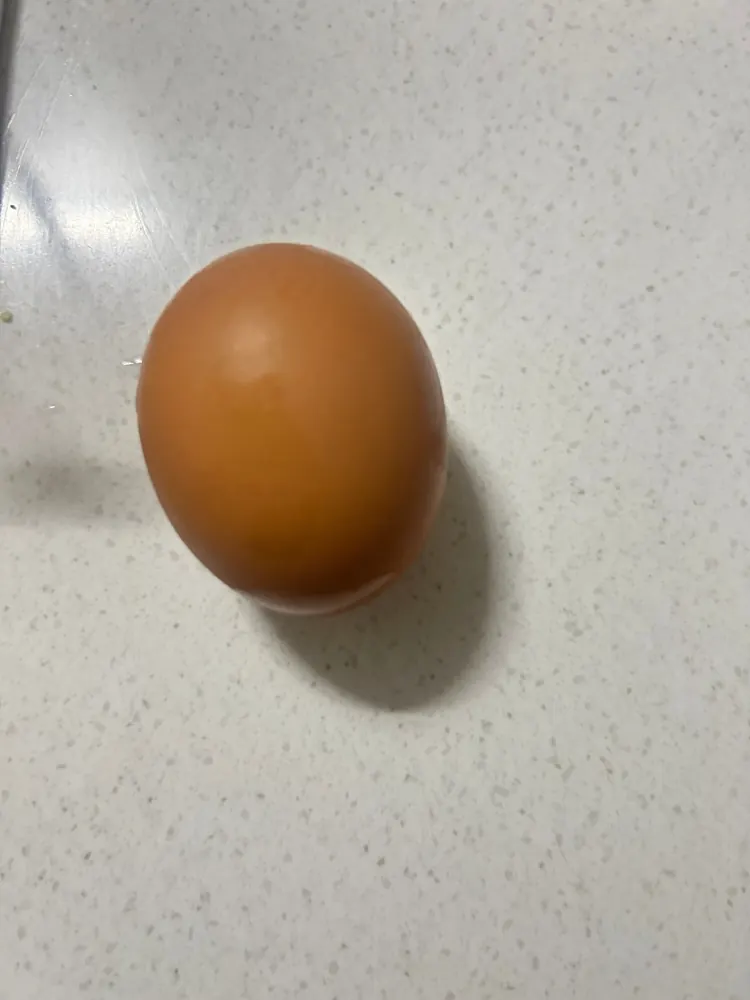
In Korea, ramyeon and eggs go together.
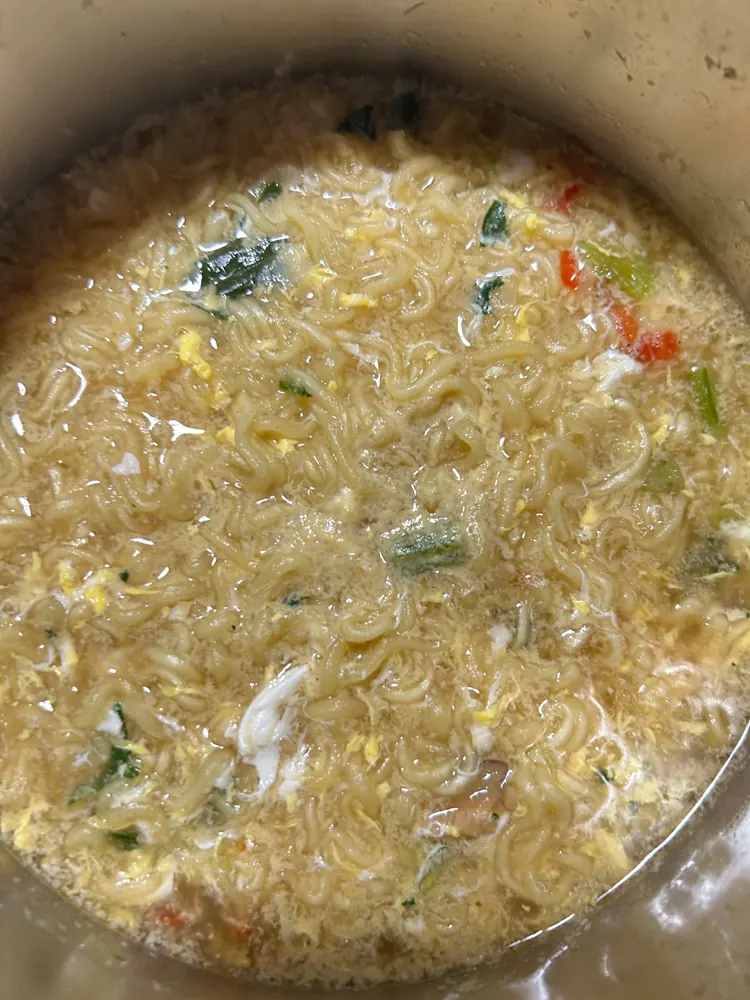
Sometimes I see posts online saying that if there is no egg in the picture on the package, you should not add one. The idea is that an egg picture means the noodles taste better with egg, and no egg picture means the maker does not recommend it. That might be true. I have never seen an egg on the packages of seafood-flavored ramyeon, for example. But I just add one anyway, even to Neoguri (a Nongshim seafood udon-style ramyeon). Sometimes I think Koreans care a little too much about the "right" way to do things... or maybe this is a trend all over the world?
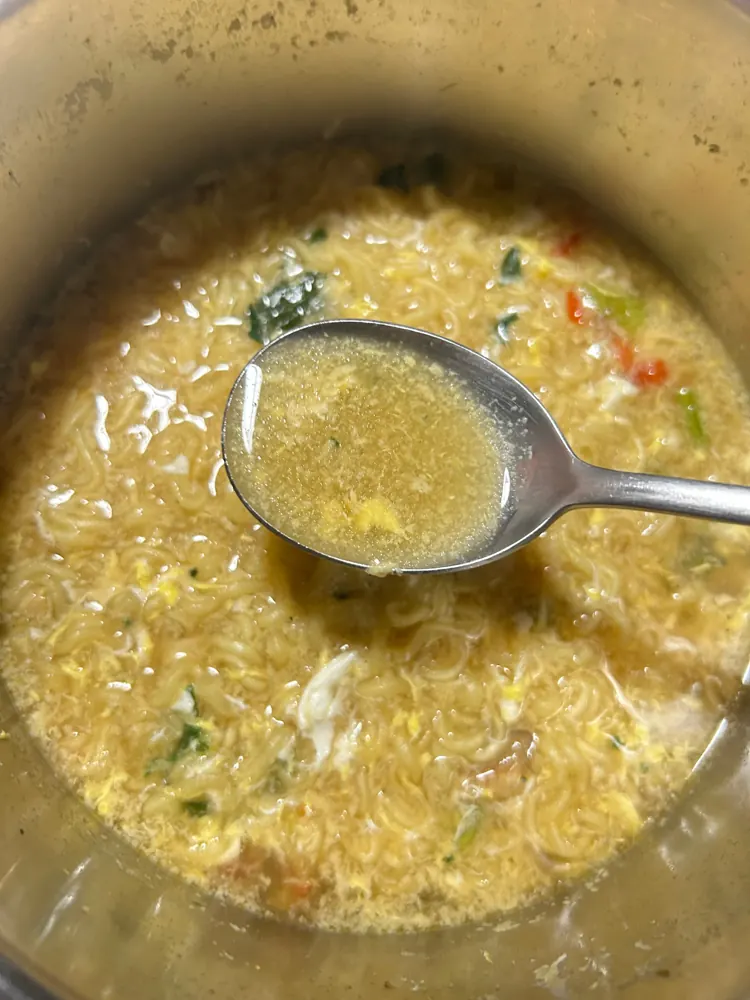
Looking at the color of the broth, it reminded me of Ansungtangmyun, another Nongshim ramyeon.
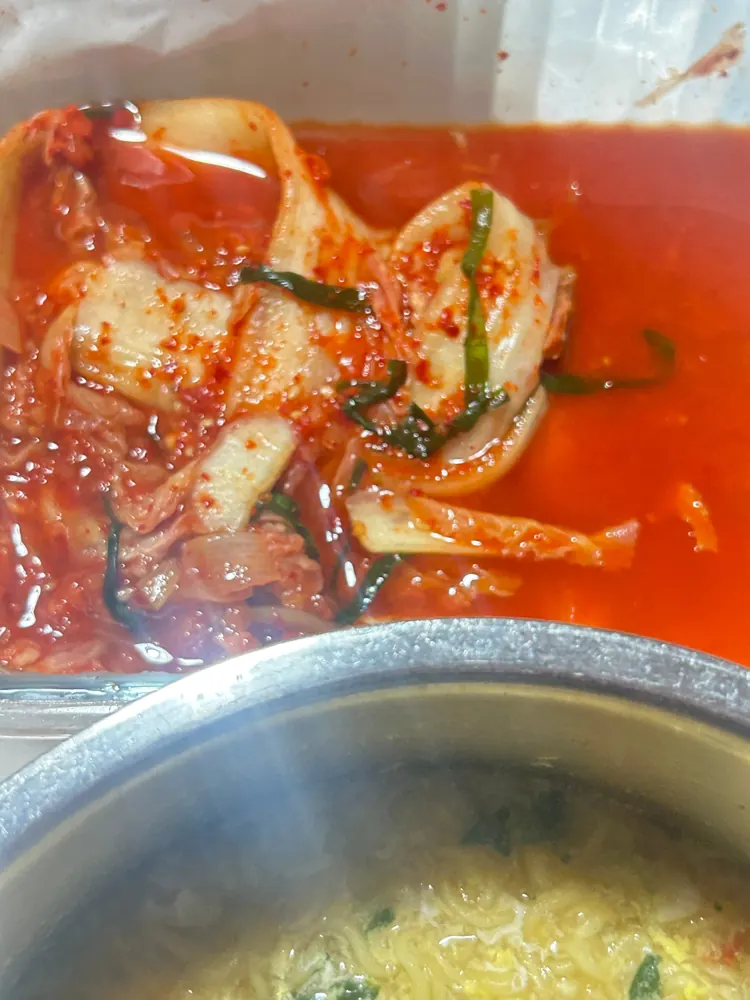
Ramyeon and kimchi are another classic pair in Korea. Actually, I only started eating kimchi as an adult. When I was a kid, I did not like it. Spiciness was never a problem for me, but I did not like the sour taste. Honestly, I could not understand what was good about it. As I got older, though, I started craving sour food, and now I even eat kimchi with plain rice. Maybe my tastes changed?
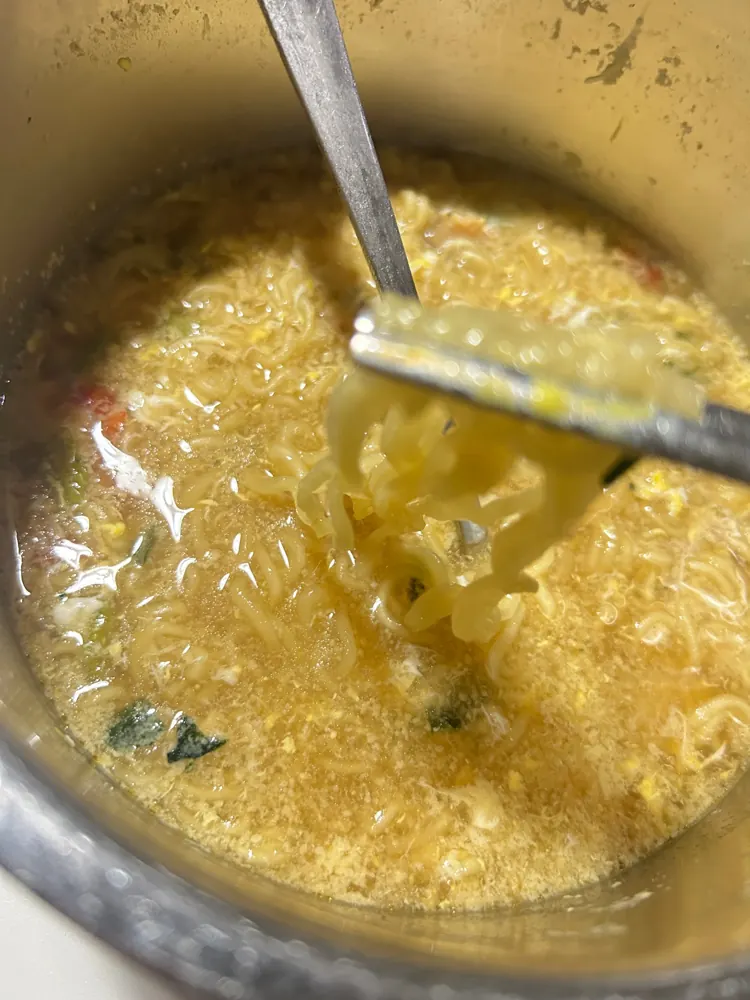
The noodles are a little thinner than regular ramyeon and look slightly translucent. I think that is because of the potato starch. The broth was not spicy. If you do not like spicy ramyeon, Gamjamyeon is one I can recommend.
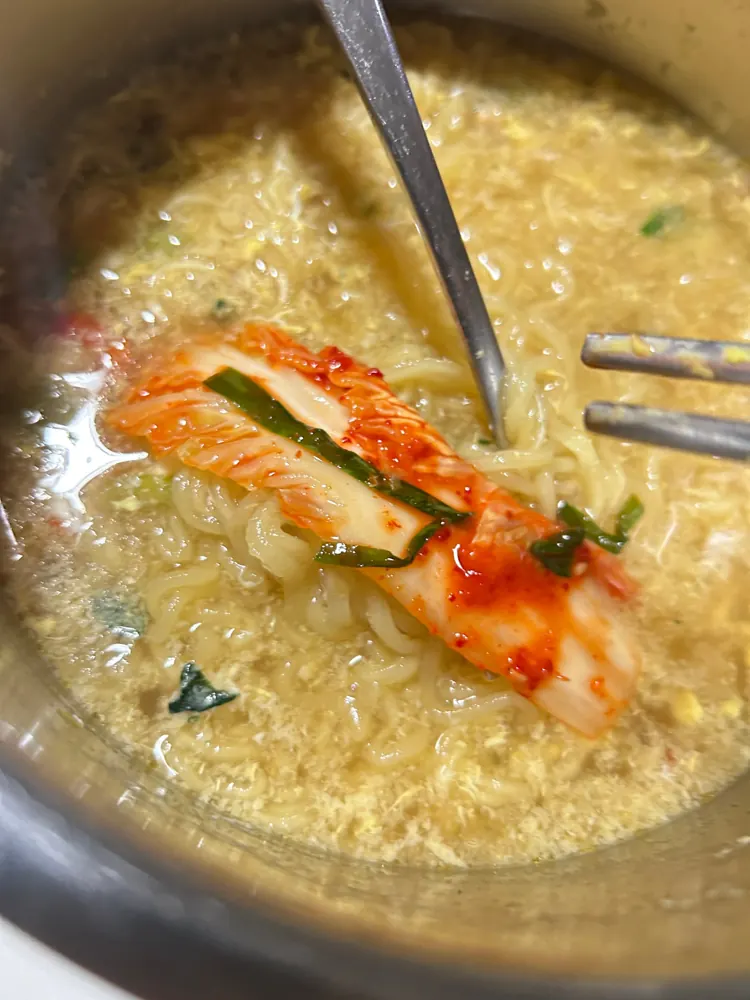
I also put kimchi on top like this. (To be honest, I only did it for the photo.)
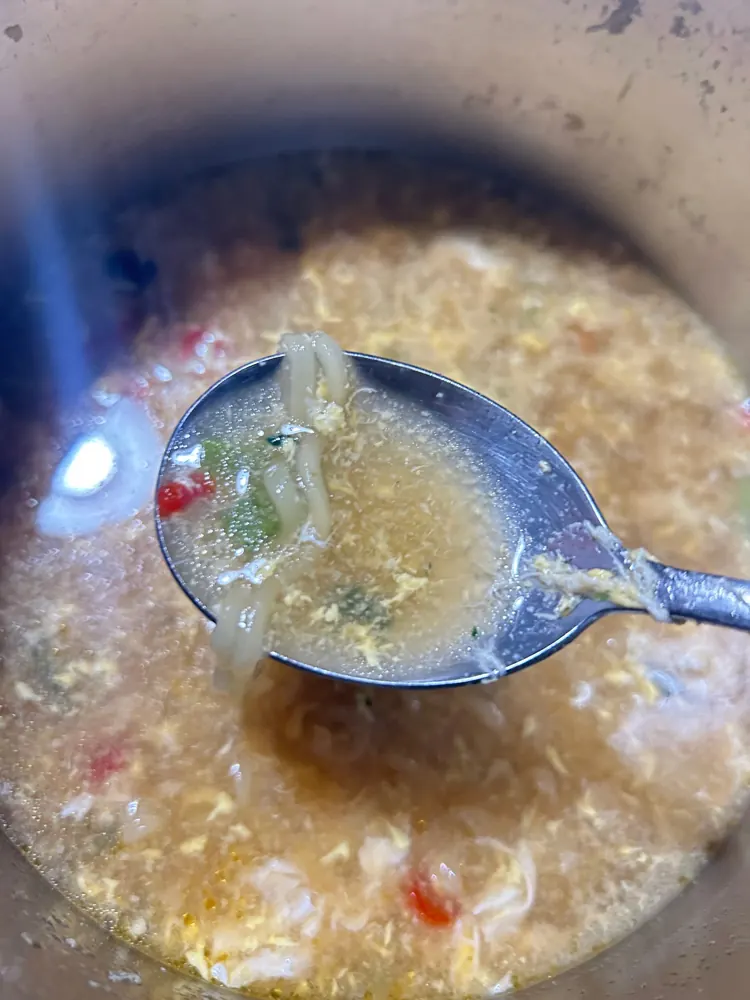
I am not really sure I could taste the beef shabu-shabu broth, but overall it was a mild, savory ramyeon that is not spicy at all. It felt a bit like Ansungtangmyun. Personally, I thought it was a good one among non-spicy Korean ramyeon. I used to eat Jin Ramen Mild (by Ottogi) from time to time, but it tasted too sweet for me, so at some point I stopped eating it completely. Is it just me?
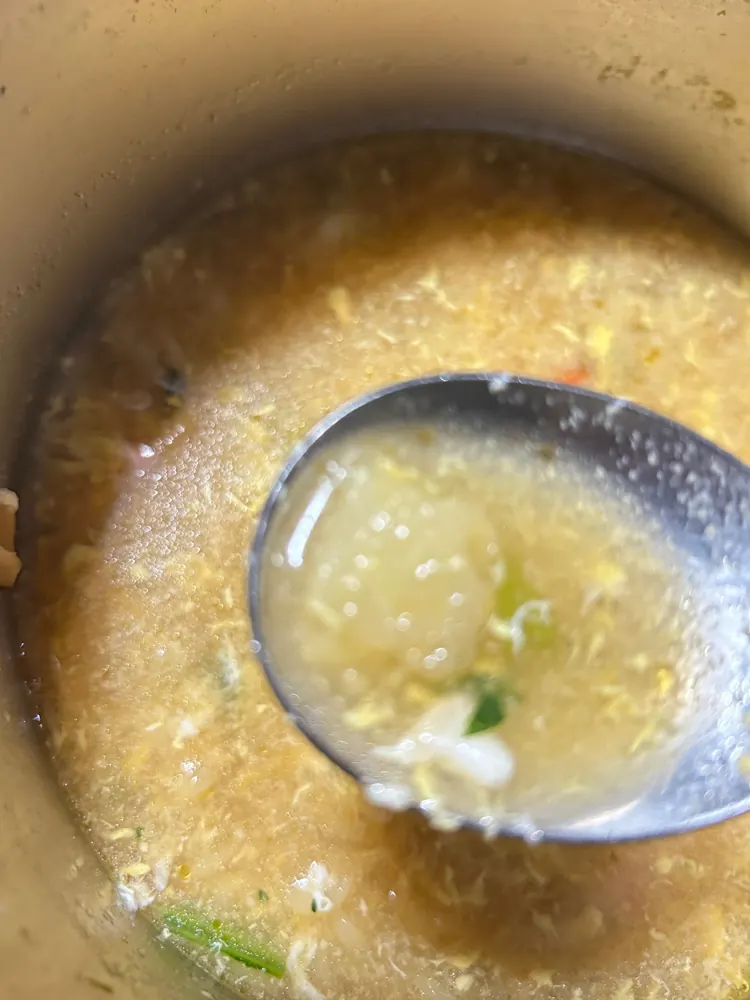
And there was even a real piece of potato in the dried flakes. A real potato taste? Gamjamyeon is an easy ramyeon to enjoy on a cold day. If you are tired of spicy noodles like Shin Ramyun, or you just want a mild bowl of noodles to settle your stomach or for the morning after a night of drinking, it is a good choice. I think it would also be easy for foreign visitors to enjoy. (Though these days, I hear a lot of people eat Buldak spicy stir-fried noodles, which even I cannot handle!)
Quick Facts
| Product | Nongshim Gamjamyeon (농심 감자면) |
|---|---|
| Flavor | Beef shabu-shabu flavor (per the package), not spicy |
| Noodles | Made with potato starch and wheat flour |
| Water | 550 ml (about 2 1/3 US cups) |
| Cooking time | 3 minutes after adding the noodles |
| Calories | 495 kcal per pack |
| Sodium | 1,750 mg per pack (if you drink all the soup) |
| Allergens on the label | Wheat, soybeans, eggs, pork, chicken, beef |
Product details are from the package I had and may change. Please check the label of the pack you buy.