The Bosingak Site (보신각터) on Jong-ro in Jongno-gu, Seoul, is where Bosingak, the bell pavilion that announced the time to people inside and outside the capital walls, has stood.
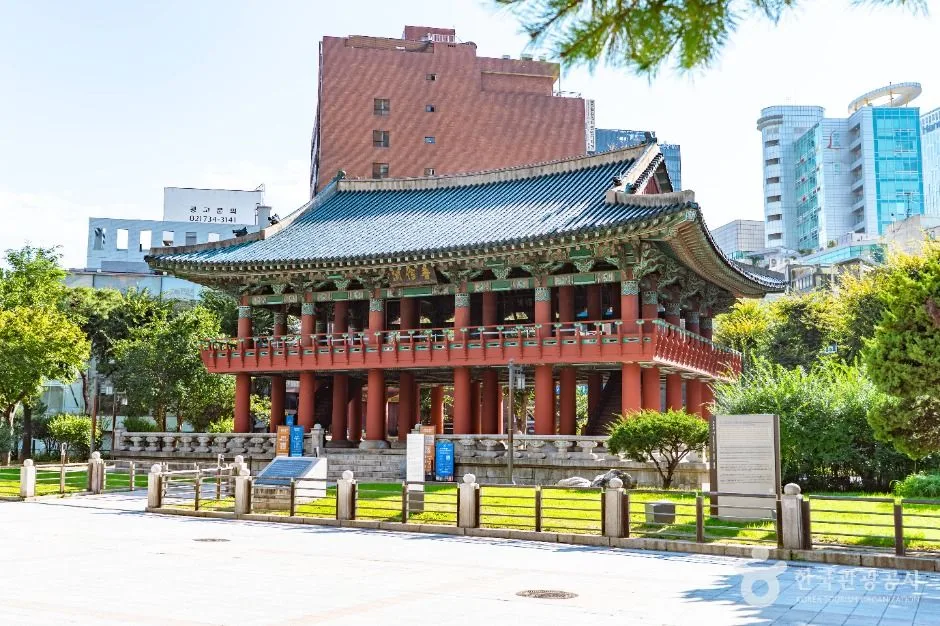
About Bosingak
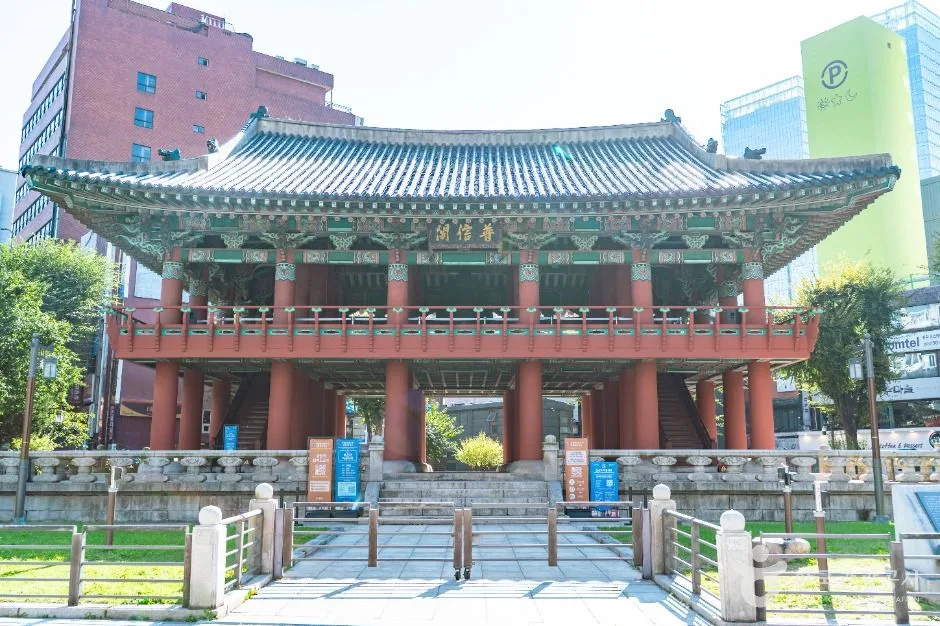
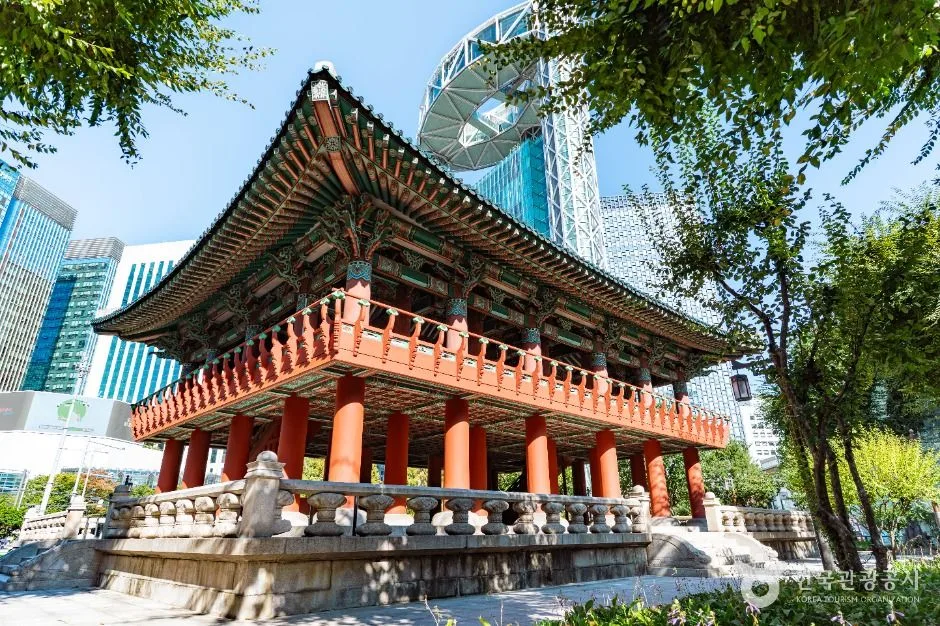
Bosingak is also called Jonggak. It got its name in 1895, the 32nd year of King Gojong's reign, when the king granted the name "Bosingak." After it was first built in 1395, the 4th year of King Taejo, it was destroyed by fire four times and rebuilt eight times. The current building was built by the City of Seoul in August 1979. It is a two-story pavilion, five bays wide on each side.
The old Bosingak bronze bell, a Treasure of Korea, was made in 1468 and kept at Wongaksa Temple. After the temple closed, it was moved to the Bosingak site in 1619. The bell rang 33 times at 4 a.m. and 28 times at 7 p.m. to open and close the city gates and tell the time. Over time, cracks formed and the bell could no longer be struck, so it is now kept at the National Museum of Korea.
Things to See and Do
- The bell: The bell hanging in Bosingak today was newly made in 1985 with donations from citizens and first rung on Liberation Day that year.
- New Year's Eve: Every December 31, the roads around Bosingak are closed to cars, and the area fills with people who come for the bell-ringing ceremony to welcome the new year.
Before You Go
- Admission is free.
- For detailed visiting hours and closing days, search on Google or another search engine.
Basic Information
| Name | Bosingak Site (보신각터) |
| Address | 54 Jong-ro, Jongno-gu, Seoul 서울특별시 종로구 종로 54 |
| Hours | Search on Google or another search engine |
| Closed | Search on Google or another search engine |
| Admission | Free |
| Contact | Jongno-gu Office, Cultural Heritage Division +82-2-2148-2032 |
How to Get There
- Subway: Jonggak Station (Line 1). Bosingak is right next to the station.
This post was prepared using Korean public data (Korea Tourism Organization), but some details may differ from the current situation. Please use it only as a reference for your trip to Korea, and if you need more information, search for the title of this post on Google or another search engine.
Source: Korea Tourism Organization (TourAPI), KOGL Type 1